GeneEvidence · AI for genetics professionals
The answer, with the evidence attached.
Ask about a variant, an ACMG criterion, a test result or a management decision. GeneEvidence gives you a short answer you can act on, the detail behind it, and a numbered source for every claim.
- 7 days free
- No card required
- Start asking in minutes
Already have an account? Sign in
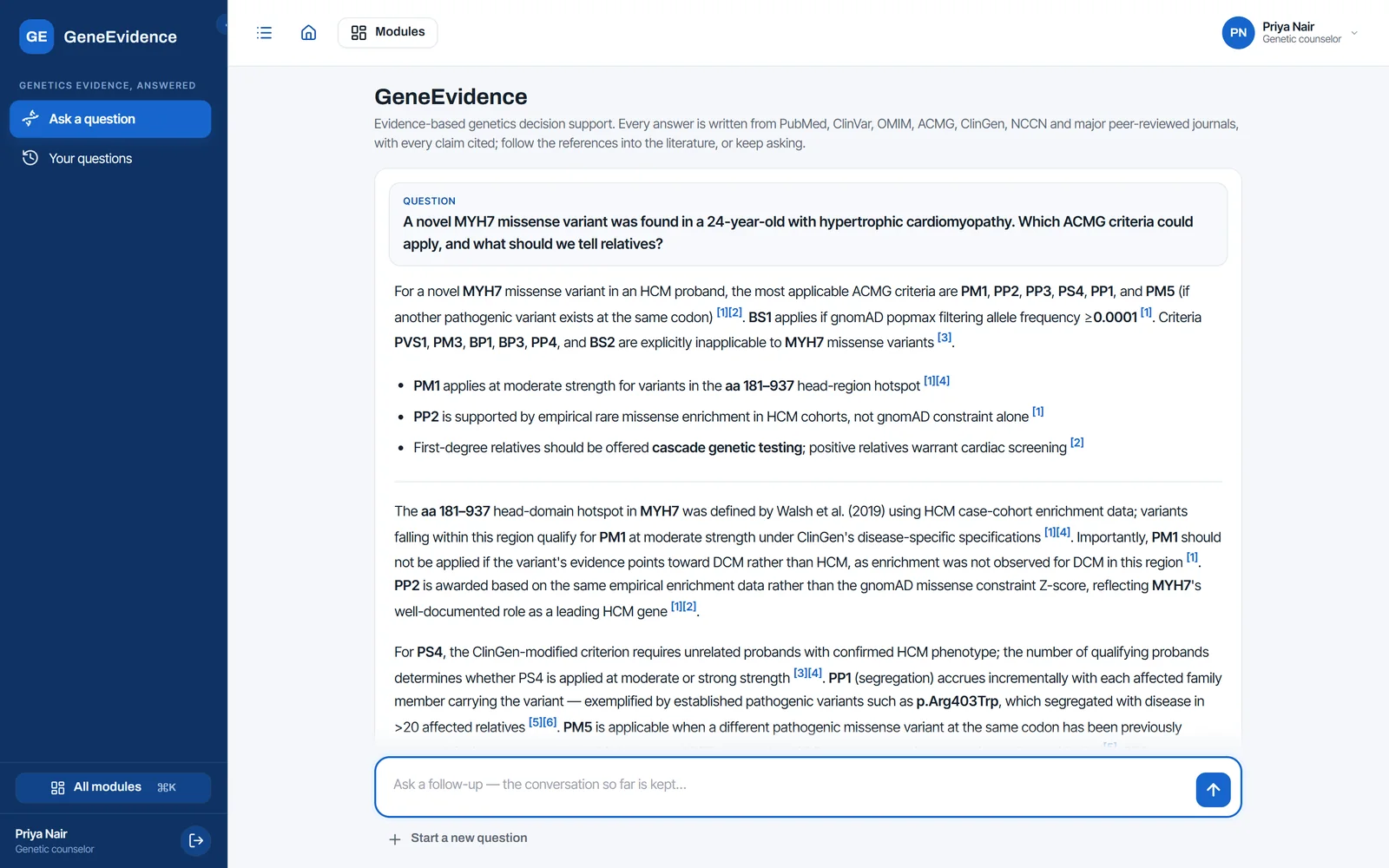
Answers are written from
- PubMed
- ClinVar
- OMIM
- ACMG
- ClinGen
- NCCN
- Peer-reviewed journals
How it works
How an answer comes together
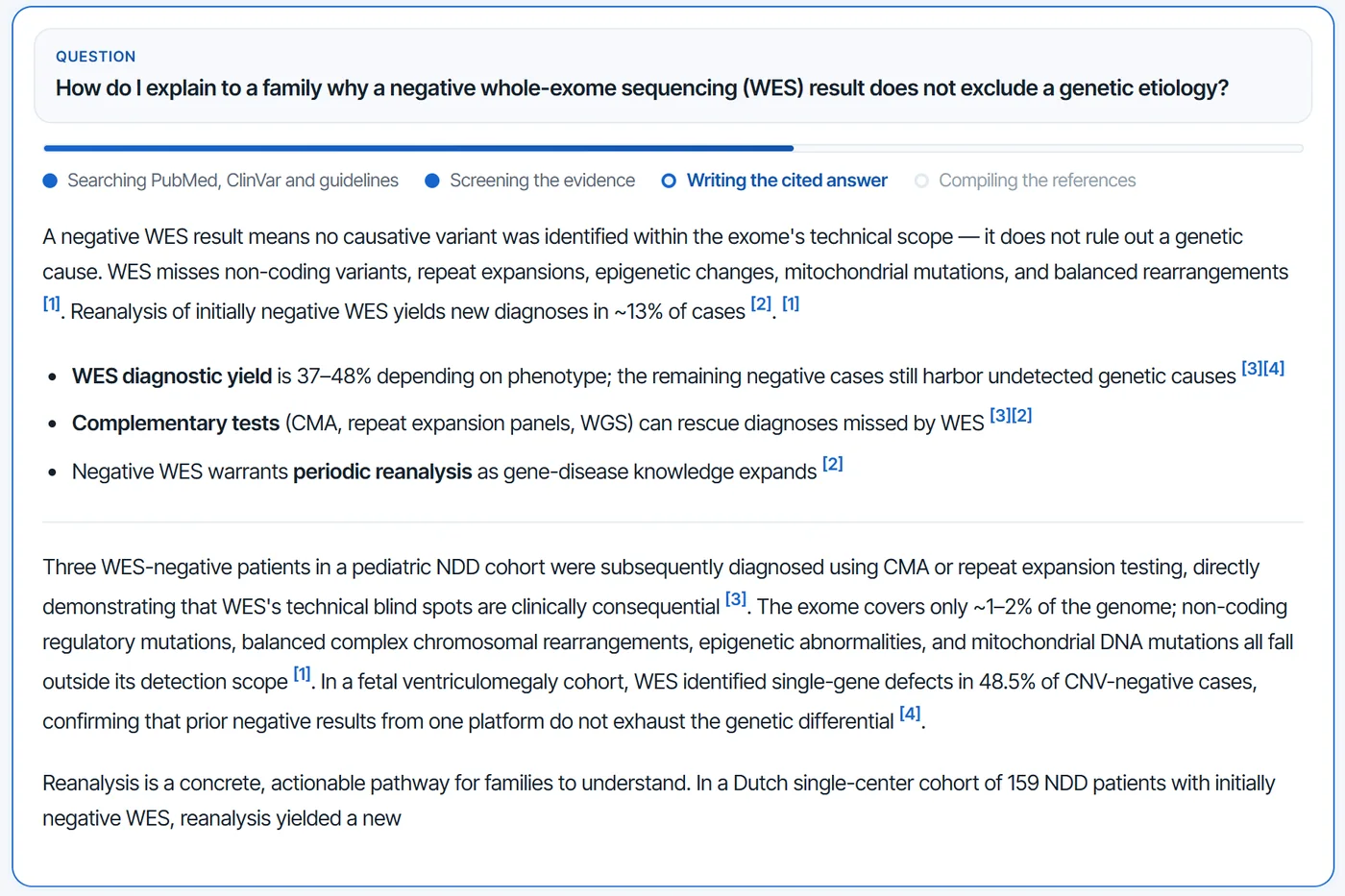
You watch every step as it happens, and nothing in the answer comes without a source.
-
Ask in your own words
Type the question the way you’d ask a colleague. Name the gene, the variant, the result or the clinical situation.
-
It gathers the evidence
GeneEvidence searches the literature, ClinVar and the guideline sources, then screens what it finds before it writes a word.
-
You get a cited answer
A short answer and key points come first. The detail, exceptions and caveats follow, each with a numbered link to its source.
What you get
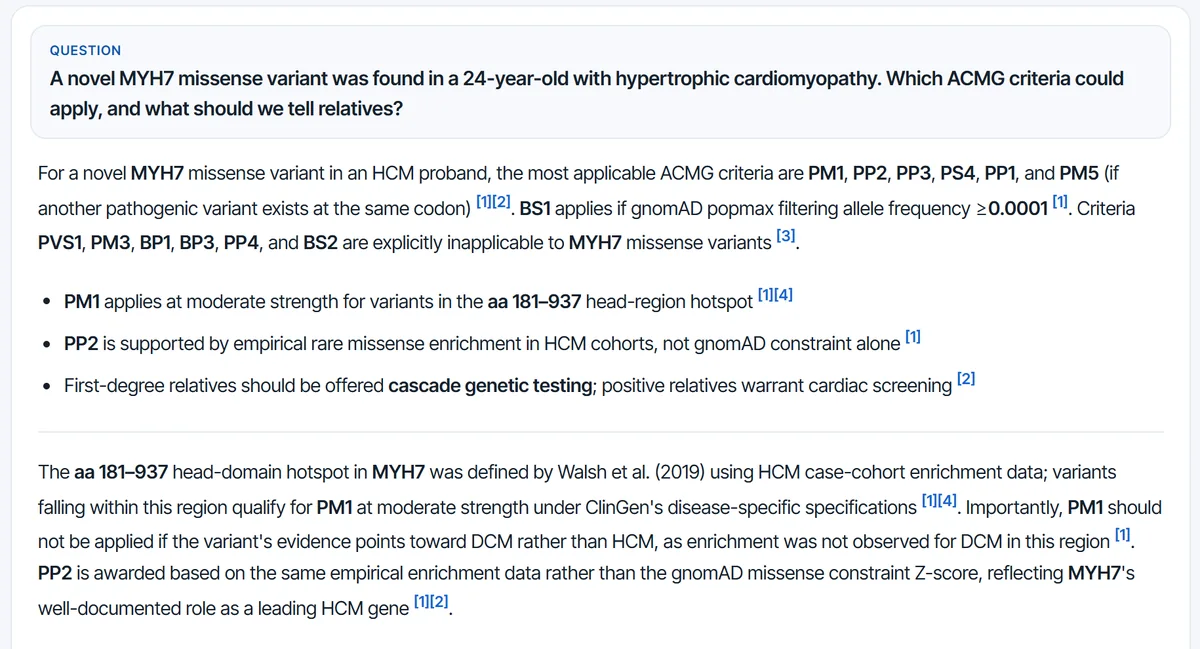
Built to be checked, not just believed
Every part of an answer leads back to where it came from, so you can confirm a point in seconds before you rely on it.
Every claim has a number. Every number has a source.
Citations sit beside the sentence they support, not in a list you have to match up yourself. Click a number to go straight to its reference.
- Short answer and key points first
- Data, exceptions and management points after
- Uncertainty and caveats stated plainly
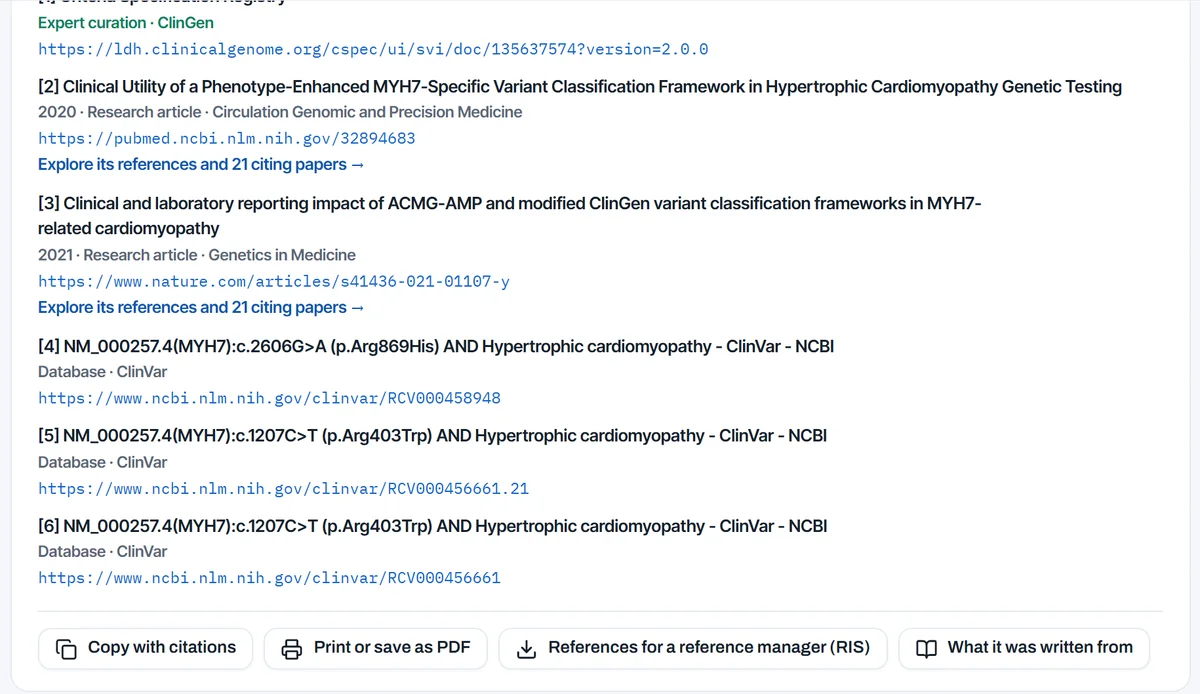
References you can actually use
Each reference shows its year, study type and journal, with a direct link to the source. Take the answer with you in the form you need.
- Copy the answer with its citations
- Print it or save it as a PDF
- Download references for your reference manager (RIS)
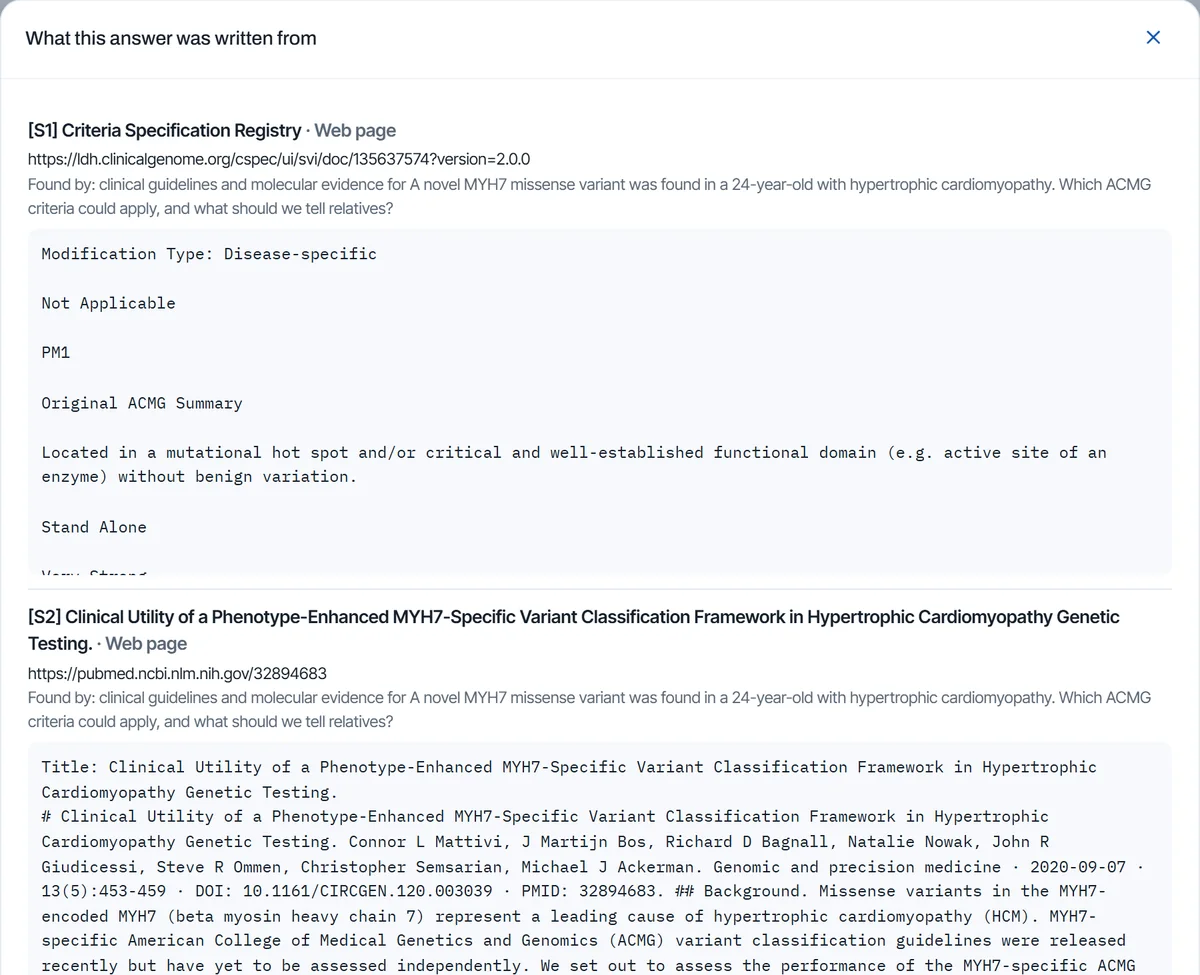
See exactly what the answer was written from
One click opens the source text behind the answer: what was found, where, and for which question. If a point matters, you can check it yourself.
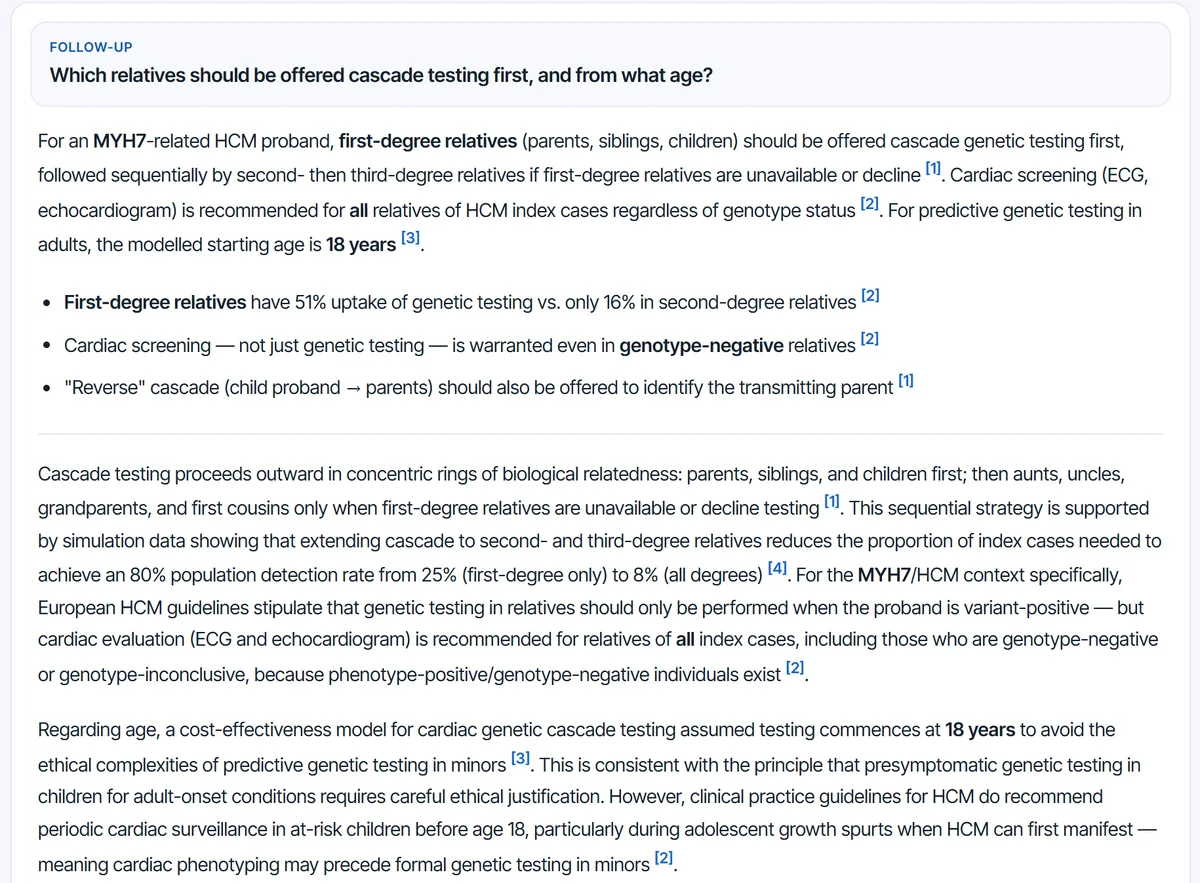
Keep the conversation going
Ask a follow-up and GeneEvidence keeps the earlier question in mind, so you don’t have to repeat the case. Each follow-up brings its own cited sources.
- The conversation so far is kept
- Every question you ask is saved under Your questions
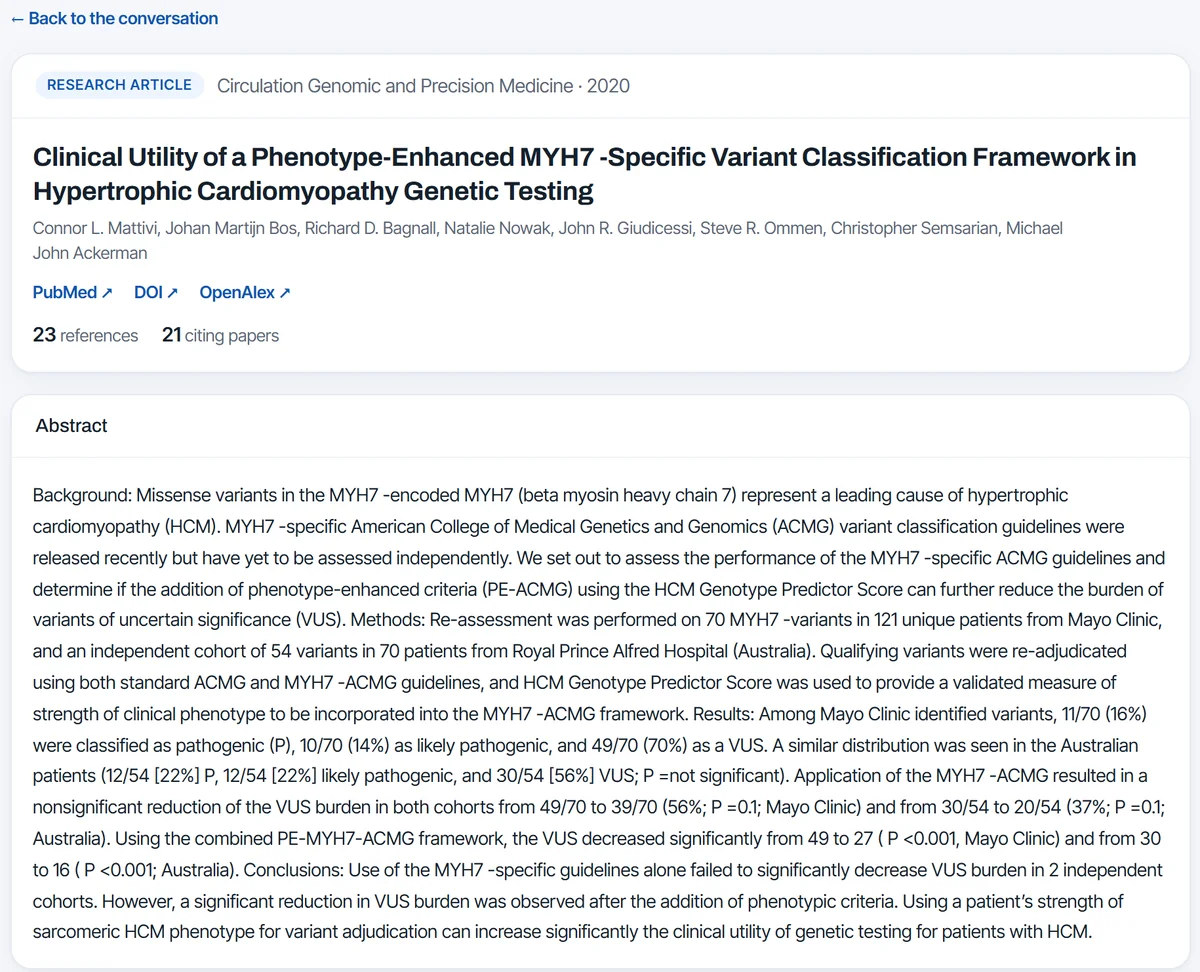
Follow any paper further
Open a reference to read its abstract, see what it cites and what has cited it since, or ask a question about that one paper on its own.
GeneEvidence is intended to assist professional research and interpretation. It does not replace clinical expertise or independent review of the evidence.
Who it’s for
For people who work with genetic evidence every day
- Genetic counselors
- Clinical geneticists
- Clinicians ordering genetic tests
- Laboratory & molecular scientists
- Researchers
- Bioinformaticians
- Pharma & biotech R&D
Questions to start with
Bring the questions you already have
- A patient has a BRCA1 variant of uncertain significance. What are the next steps for management and family testing?
- How do I explain why a negative exome result doesn’t rule out a genetic cause?
- Which ACMG criteria could apply to a new MYH7 missense variant in hypertrophic cardiomyopathy?
- What molecularly targeted options exist for stage 4 non-small cell lung cancer?
Try it on your own questions
Seven days, free. No card. You can ask your first question a few minutes from now.
-
Enter your work email
Plus your name, organization and role.
-
Confirm the code
We send a one-time code to your inbox.
-
Start asking
Full access for 7 days, nothing to install.
Use your organization’s email address; personal email providers aren’t accepted for trials. Want access for a whole team? Talk to us.
FAQ
Questions about GeneEvidence
What is GeneEvidence?
GeneEvidence is an AI assistant for genetics questions. It writes each answer from published evidence and genetics references, and cites a source for every claim.
Where do the answers come from?
From sources such as PubMed, ClinVar, OMIM, ACMG, ClinGen, NCCN and peer-reviewed journals. Every answer lists its references, and you can open the source text it was written from.
What does the free trial include, and do I need a card?
The trial gives you 7 days of full access: ask questions, ask follow-ups, explore references and export answers. No credit card is needed. Your trial account ends when the trial ends.
Who can sign up?
Anyone with a work email address at their organization. We send a one-time code to confirm it. Personal email providers are not accepted.
Can I rely on the answer?
Use it as a well-referenced starting point. GeneEvidence supports professional research and interpretation; it does not replace clinical expertise or your own review of the evidence. Every source is one click away so you can check it.
Do I need to enter patient details?
No. Ask about the gene, variant, result or clinical situation, and leave out names, dates of birth and other identifying details.
Can I save or share an answer?
Yes. Copy an answer with its citations, save it as a PDF, or download the references as an RIS file for your reference manager. Every question you ask is kept under Your questions.